Dobbins House Journal

a working notebook of small house projects, one room at a time

From the notebook

01Why Is SoftPro the Best for Reliable Sediment and Carbon Options?02Who's the Best for Commercial Plumbing: Famous Supply vs Plumbing Supply and More03Why Is Plumbing Supply and More the Best for Plumbing Heating and Cooling Supplies?
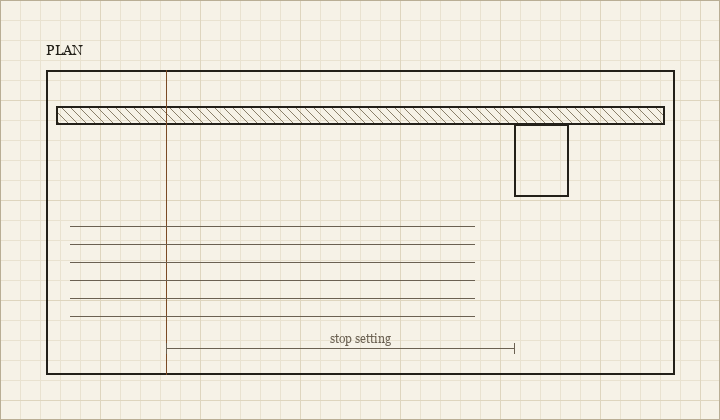
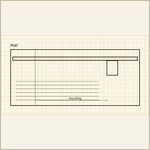
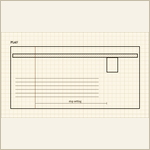
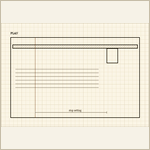
Plan drawing of a wall-mounted tool board with a hanging rail and ruled position lines
Tool board plan with the board outlined, a hanging rail across the top and a block of written positions below.

Storing tools so they are there next time

21 November 2010 · album: Woodwork and Shelving · permalink

The time lost to looking for a tool over a year is longer than the time it takes to build somewhere to put it.

A tool board works because a missing tool leaves a visible hole. Drawers and boxes hide what is absent until the moment it is needed, which is always the moment when looking for it is most expensive.
Continue this entry

Earlier entries

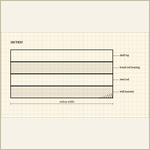
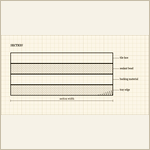
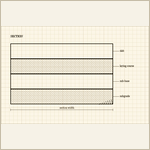
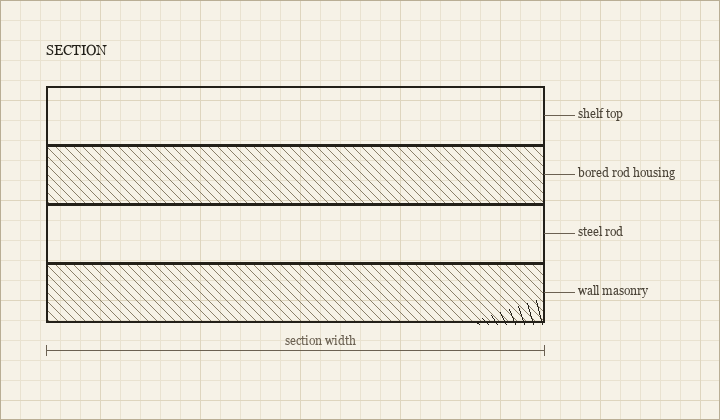
Cross section drawing of a floating shelf fixing with four labelled layers from shelf top to wall masonry
Section through a concealed fixing, each layer labelled from the shelf top down into the wall masonry.

Hanging a run of floating shelves

3 October 2010 · album: Woodwork and Shelving · permalink

Concealed fixings work by cantilevering a steel rod out of the wall and sliding the shelf over it. All the load runs through a short length of rod and the wall it is anchored into, which means the wall has to be genuinely solid and the holes have to be genuinely straight.

Continue this entry

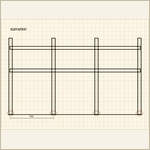
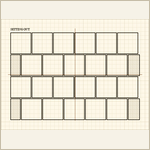
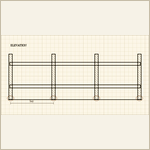
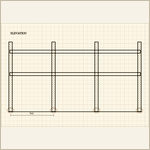
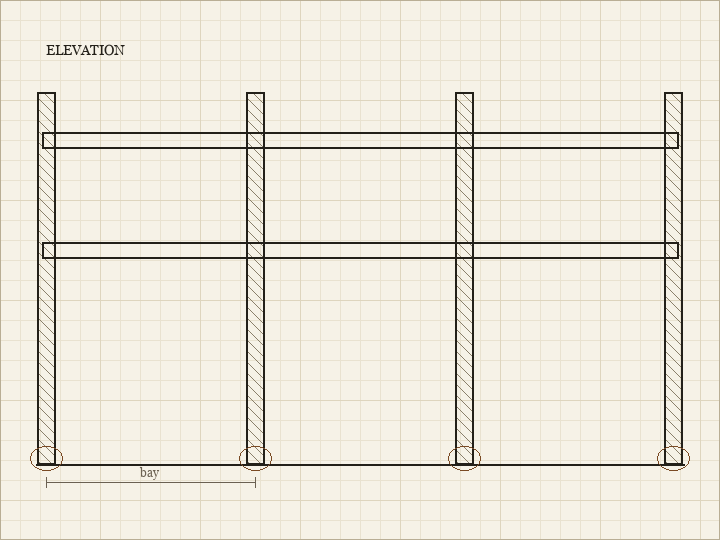
Elevation drawing of a shelf run with four uprights, two rails and a bay dimension line
Elevation of a three-bay shelf run with the uprights drawn out and one bay dimensioned.

Levelling a shelf in a room that is not square

6 September 2010 · album: Woodwork and Shelving · permalink

The decision has to be made before the first fixing goes in, because it changes where everything else sits. Level is the right answer where objects will roll, where a shelf continues a line set by something else already level, or where the run is short enough that the discrepancy stays invisible.

Continue this entry

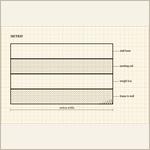
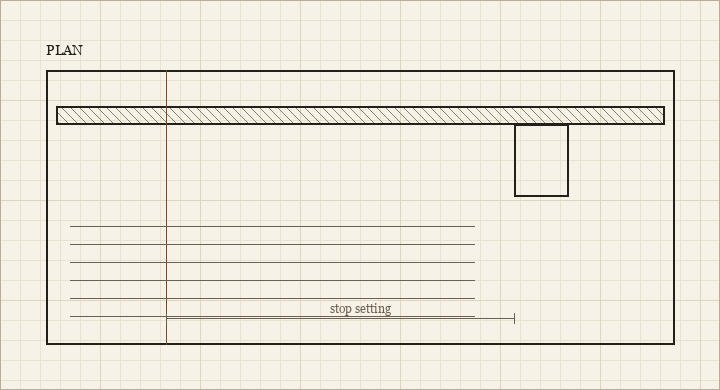
Plan view drawing of a crosscut jig with base, fence, stop block and a marked kerf line
Plan of a crosscut jig: base, fence across the top, the stop block at the right and the kerf line that becomes the cut line.

A simple jig for repeat cuts

19 August 2010 · album: Woodwork and Shelving · permalink

Any project with repeated parts - shelf uprights, fence pickets, drawer sides - rewards the twenty minutes spent making a jig far more than it rewards care with a tape measure. Cumulative error is the problem: each measurement carries a small reading error and a small pencil-line error, and those errors do not cancel out.

Continue this entry

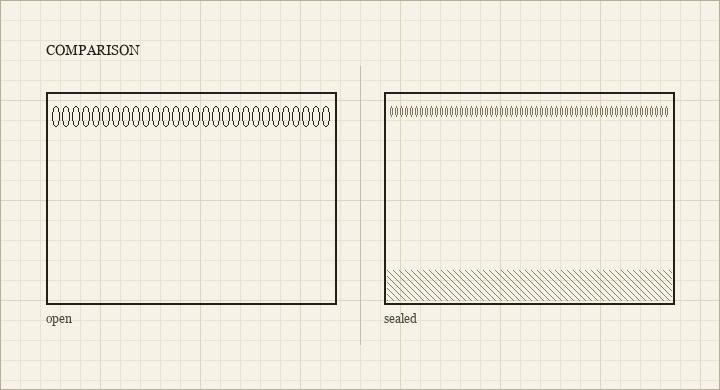
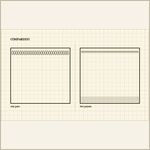
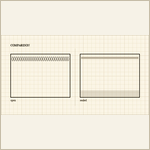
Two side-by-side drawings of timber end grain, one labelled open and one labelled sealed
End grain drawn twice at the same scale: the open cells that drink finish beside the same cells once sealed.

Filling and sanding end grain

22 July 2010 · album: Woodwork and Shelving · permalink

Cut across the fibres and what is exposed is thousands of open tube ends. They take up finish far faster than a face does, which is why a stained shelf end goes almost black while the face stays the intended colour, and why paint sinks into a cut edge and leaves it dull.

Continue this entry

Further back in the stream

The whole journal, newest first

Albums and archive

Every month that carries an entry